 Faire un don
 Artistes
 Mon profil


Kong Mo
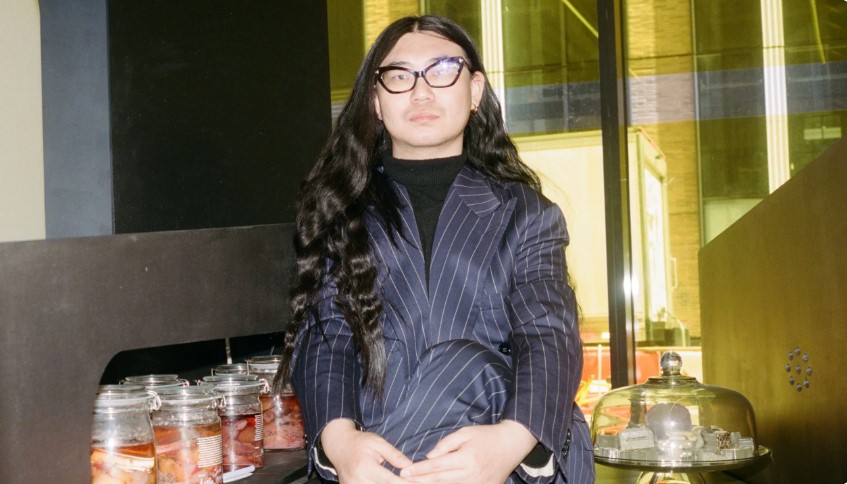
Mo Kong is an interdisciplinary artist and researcher whose practice explores the intersections of science, identity, and speculative futures. They have presented solo exhibitions at institutions including the Queens Museum, Smack Mellon, CUE Art Foundation, Cuchifritos Gallery, Artericambi Gallery (Verona), Gertrude Gallery, and Chashama. Their work has also been featured in group exhibitions at venues such as the Queens Museum, RISD Museum, SFMOMA, Minnesota Street Project, SPRING/BREAK Art Show, ARTISSIMA, Make Room Gallery, Rubber Factory, Hesse Flatow, and Island Gallery.
Kong has been awarded fellowships and residencies from the Jerome Hill Foundation, Sharpe-Walentas Studio Program, Cafe Royal cultural Foundation, NYSCA, MacDowell Colony, Skowhegan School of Painting & Sculpture, Triangle Arts Association, The Drawing Center, City Artist Corps Grant, MASS MoCA Studios, Vermont Studio Center, Lighthouse Works, and Artists Alliance LES Studio Program, among others.
They have been named a finalist for prestigious awards including Creative Capital, Artadia, the New York Foundation for the Arts (Architecture/Design), and the Van Lier Fellowship.
Kong’s work has been reviewed and featured in a range of prominent publications such as Artforum, Art in America, Hyperallergic, Cultured Magazine, Artnet, BOMB Magazine, ArtPapers, The Brooklyn Rail, Wall Street International, and SFMOMA Public Knowledge
-
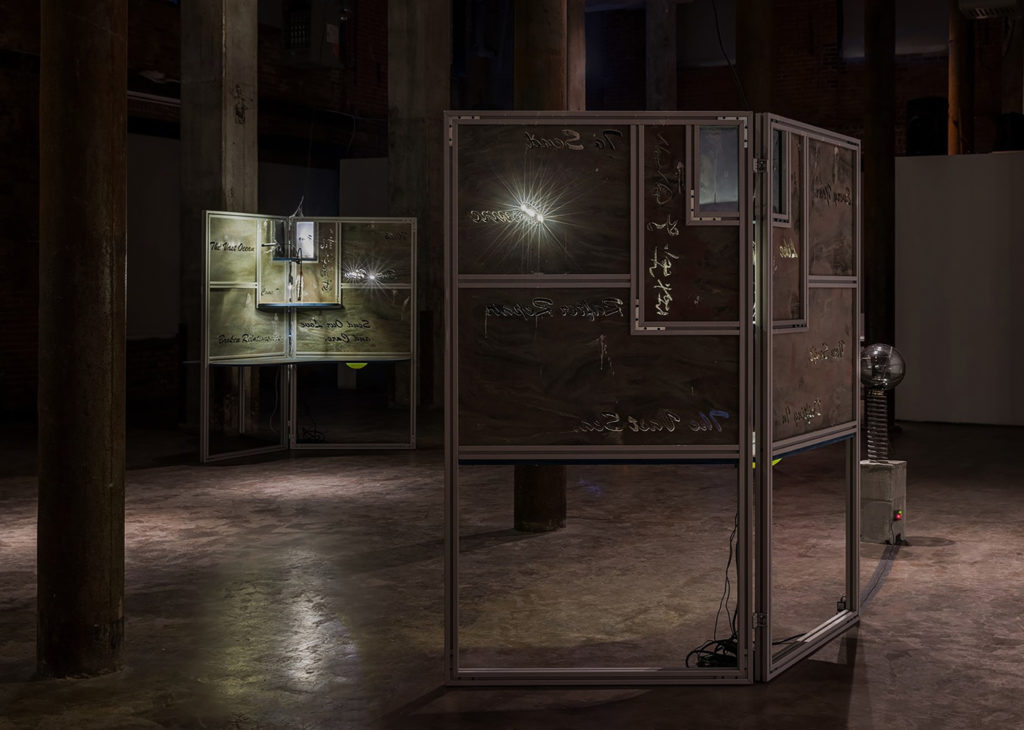
Swift Island Chain
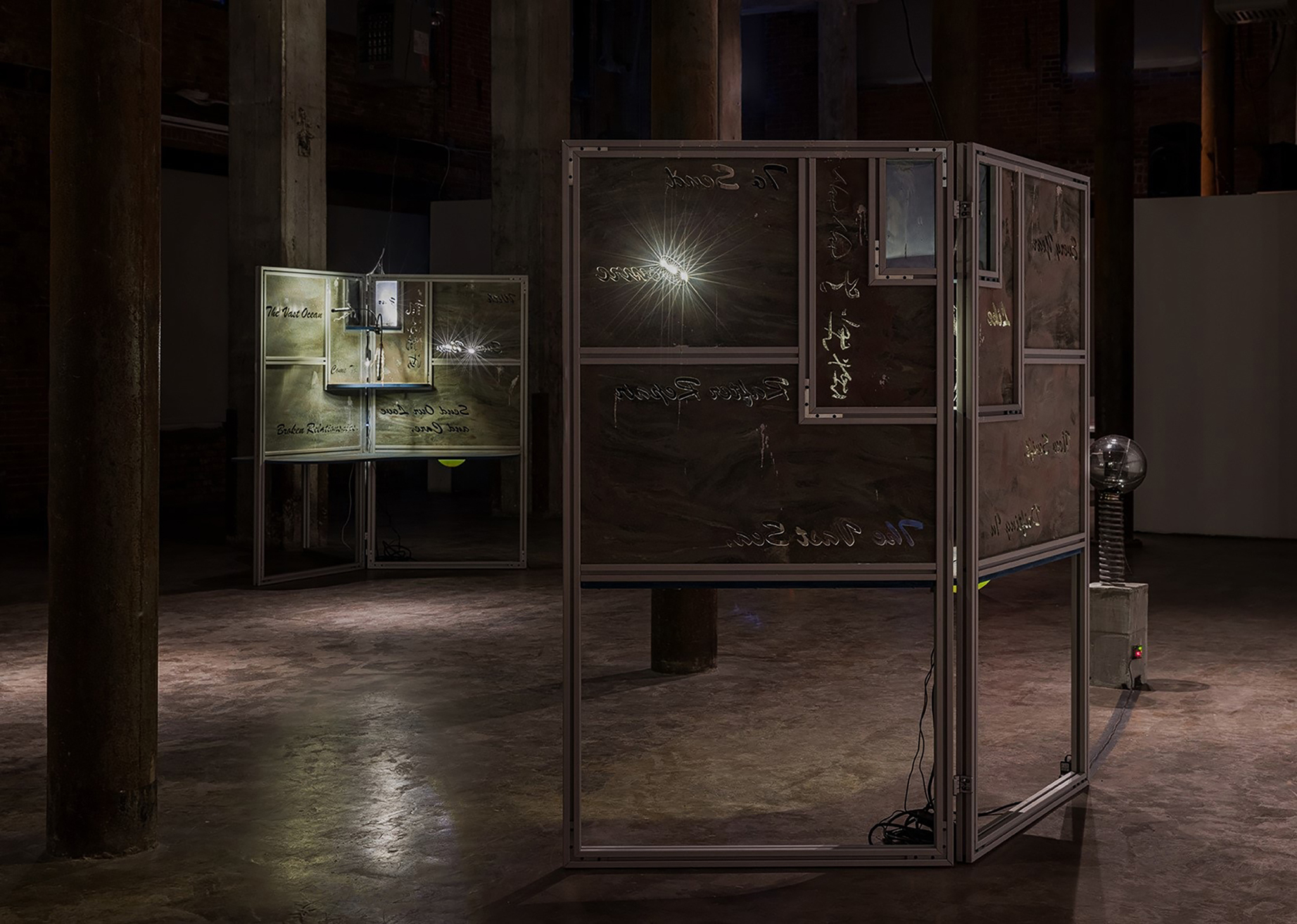
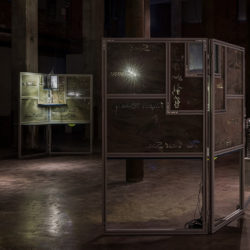
The work explores racial melancholia and the information gaps experienced by Asian immigrants through disjunctures in contextual communication. The instillation unfolds between Smack Mellon’s center columns through a series of modular post
pandemic office environments and work aesthetics that are presented in various states of completion. Corian® interior architectural panels, lab-grown leather, AI feedback mechanisms, and an alienating melody composed by sound artist Lemon
Guo give texture to the installation, creating a foreboding and anxious atmosphere. -
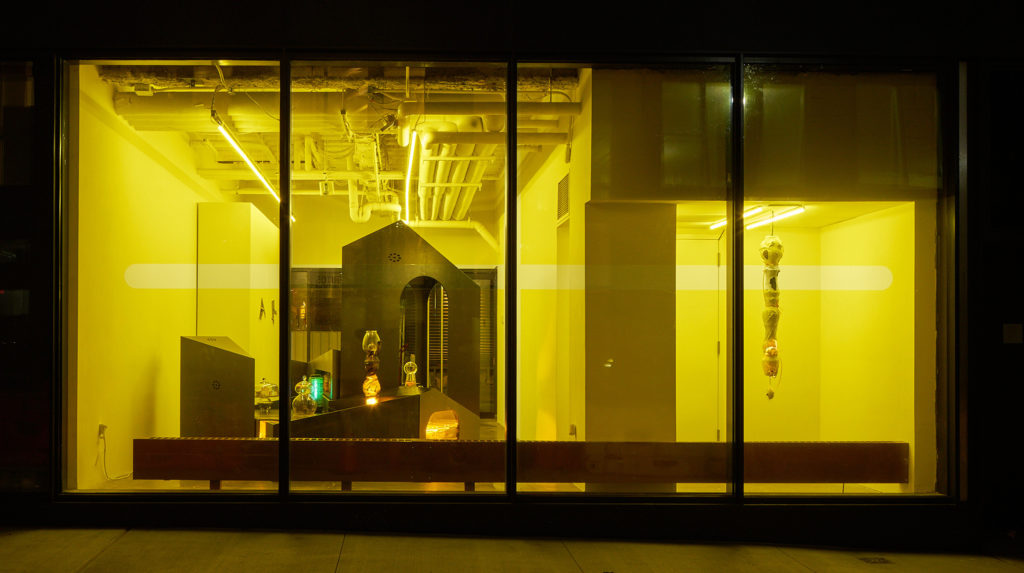
Lounge of A Prophet
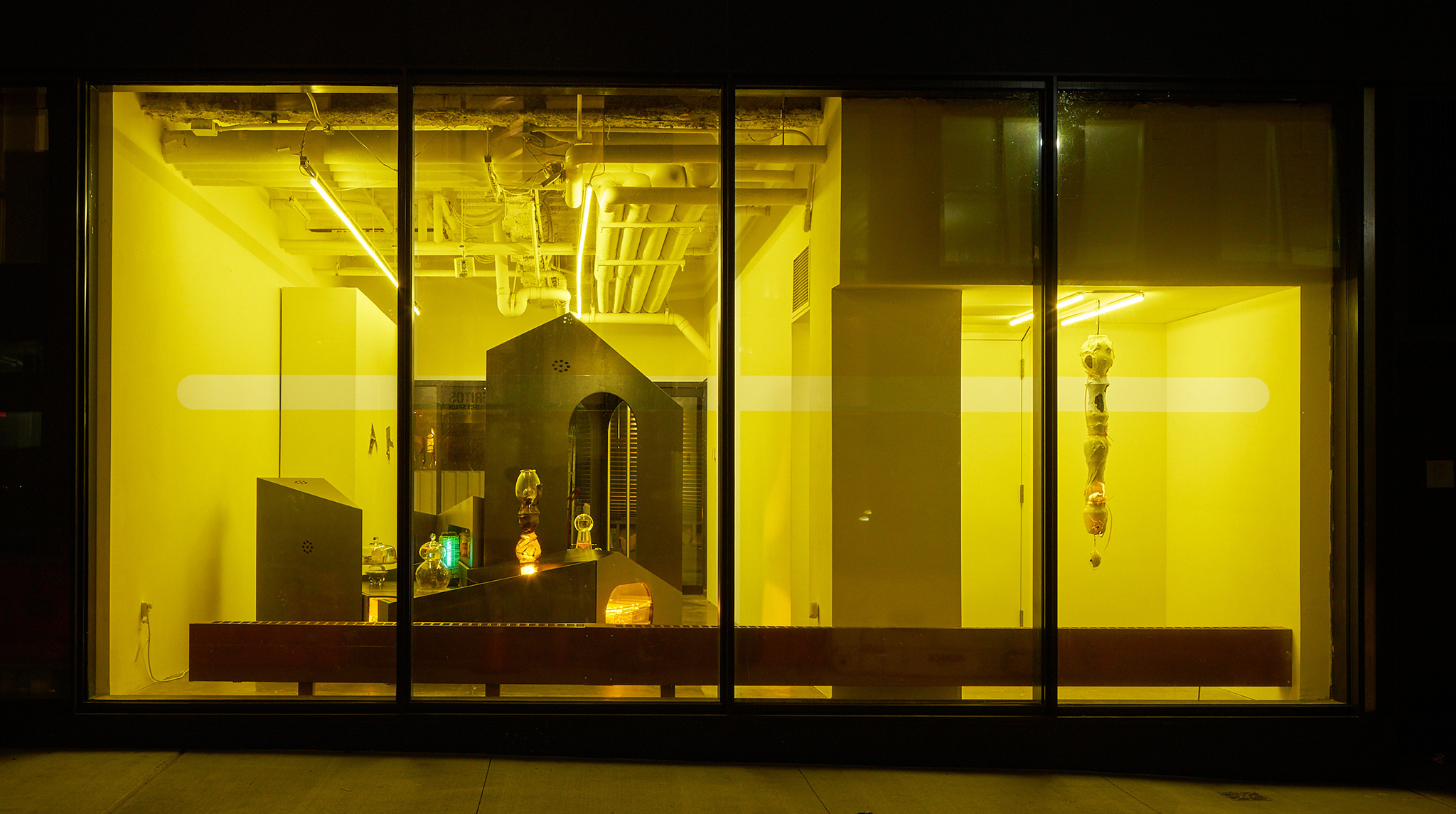
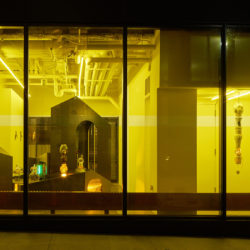
The work was inspired by the Chinatown lighting store's window display and the fortune teller shop's domestic but commercial interior design, the work reversed the process of modern architecture process, it redefined common space based on
functionality, The personal stations with survival purposes in the future. -
Personal Ark ®
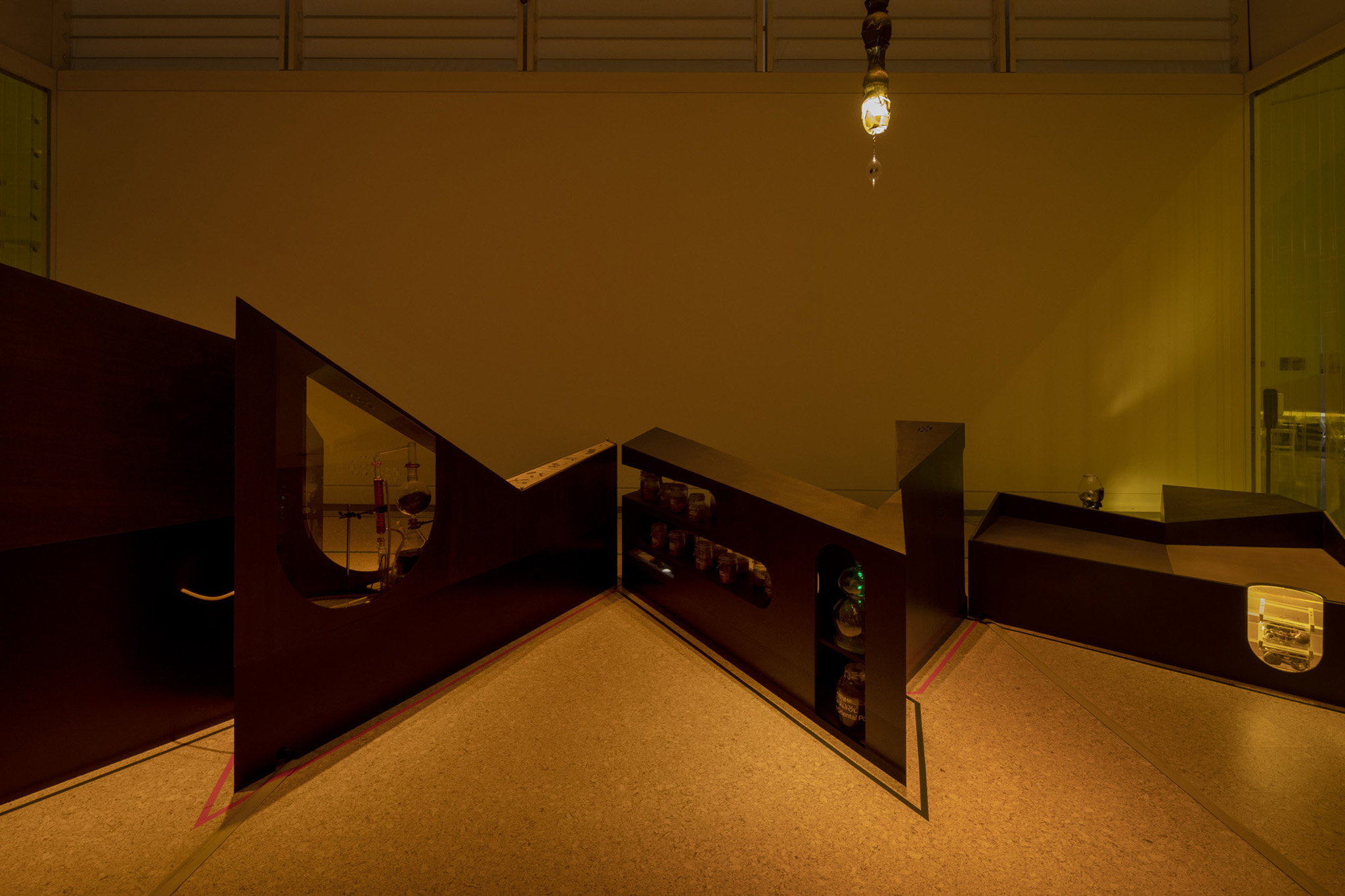
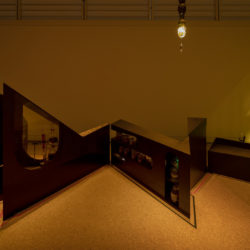
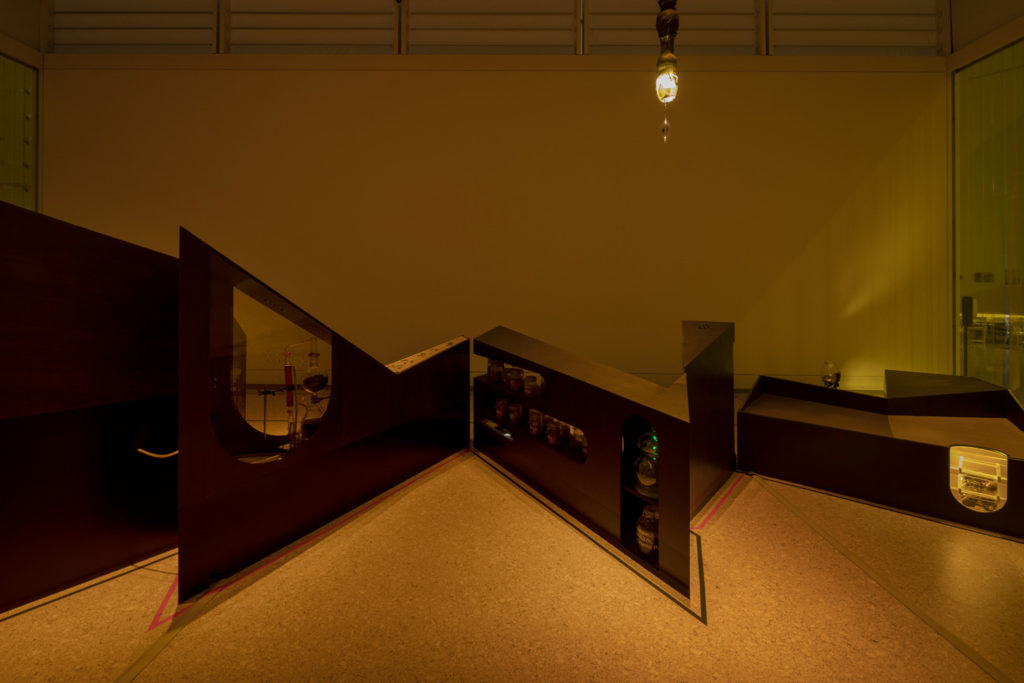
The series of furniture/sculptures reference the overlapping data points of two-line graphs–International Trade Rates and Natural Disaster Rates from 2009 to 2020–with each section providing a solution for shelter during ecological collapse and economic
isolation. Inspired by the American survival bunker companies, the sculpture is divided into seven pieces of furniture/architecture, which share the functions of food storage, temperature regulation, energy recycling, and species preservation. The heavy and sturdy structure makes them a shield against natural disasters, while the sculptures can be freely combined like modules, redefining the space by merging functions. This work also incorporates research on atmo-orientalism in American history and scientific
colonialism. As a scent and experience-focused work, it is hard to document through photographs alone. The work recreates the “Chinese Smell” described in Otis Gibson‘s book “Chinese in America” (1877); however, the ingredients used also come from the Western corporate biopiracy of Asia. Since the 18th century, smell has been used as a tool to racialize Asian Americans and limit the expansion of Chinese neighborhoods specifically in urban areas. The utilization of smell in this work also highlights the
invisibility of this racial history. -
New Yorkool®
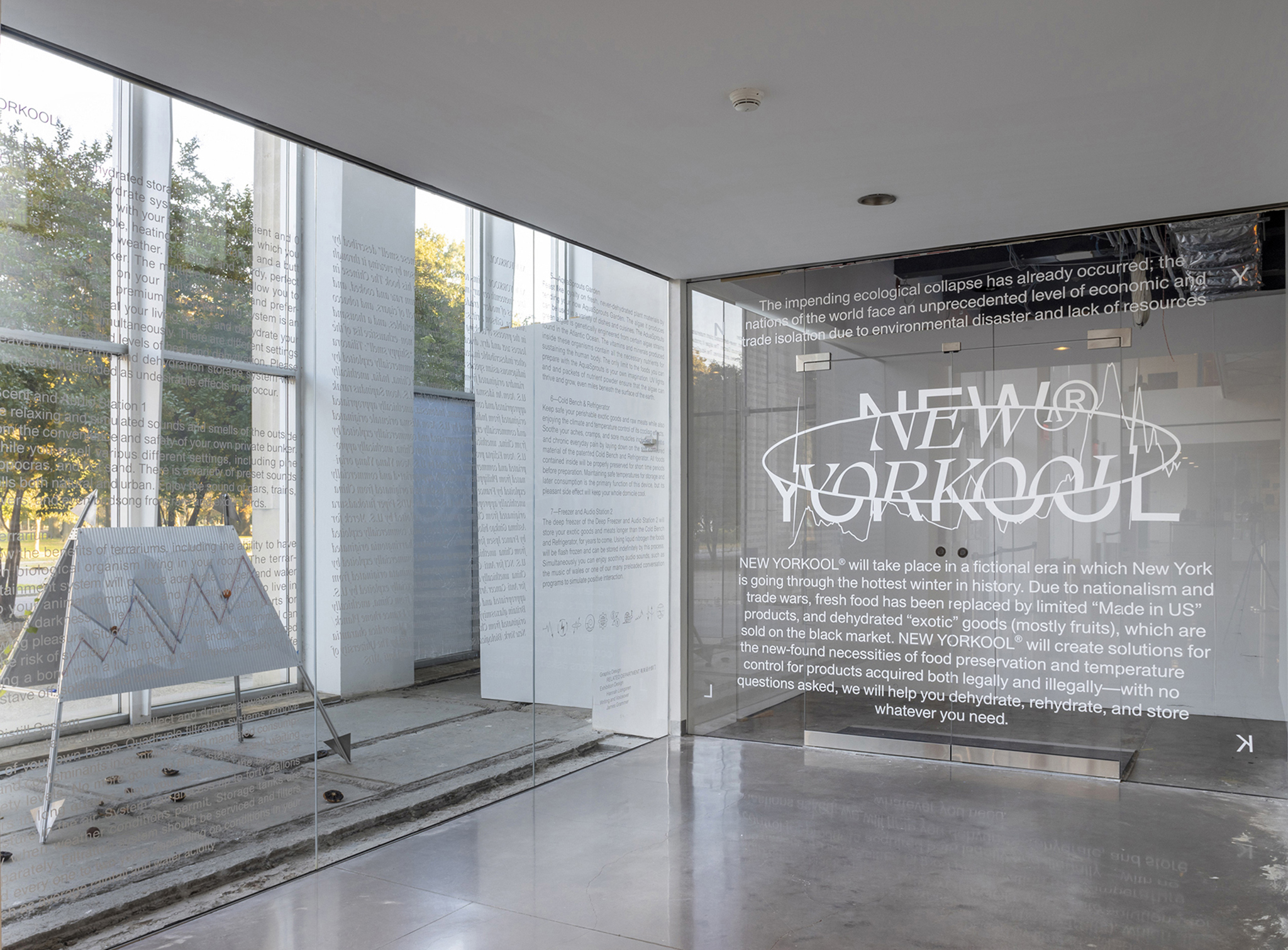
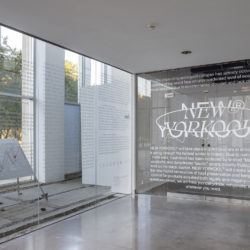
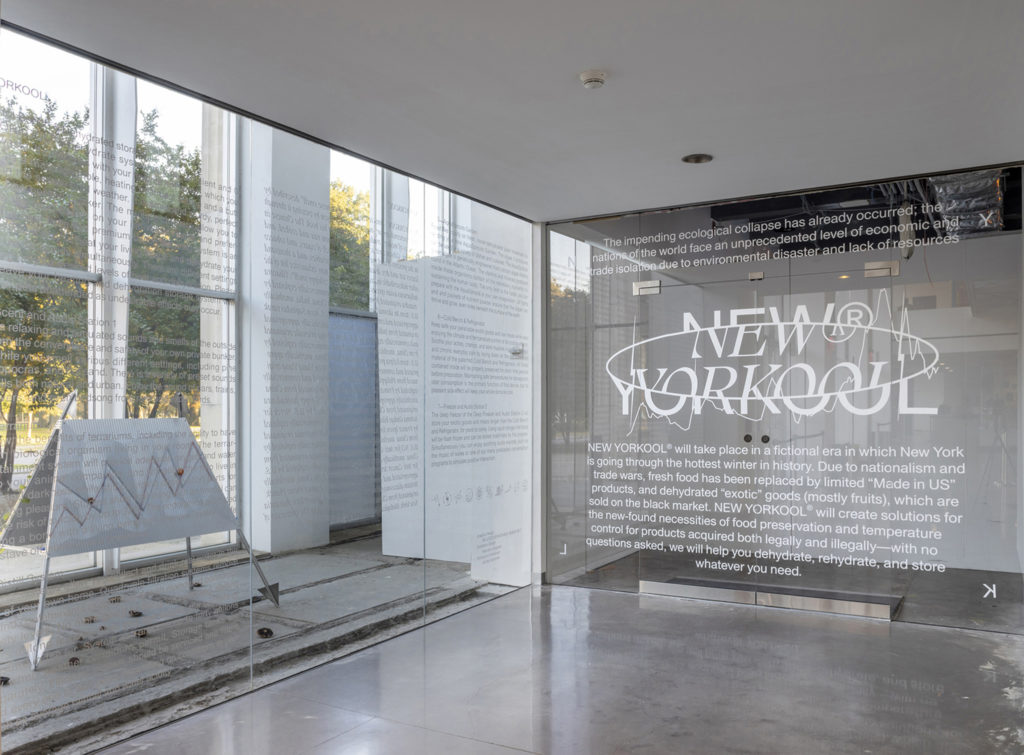
New Yorkool as the office of the incorporation, the whiteboard marked the two charts “International trade rate” and “Natural disaster rate” from 2009 to 2020, it also functions as a plant climber and dehydrated fruit shelves. The text on the large glass windows was the product manual of the 7 furniture pieces, the middle window was MinKwon Center's free immigration services written backward only can be read from outside of the museum, as a symbol of inclusivity.
-
Stray, Landing, Seeing Stitches
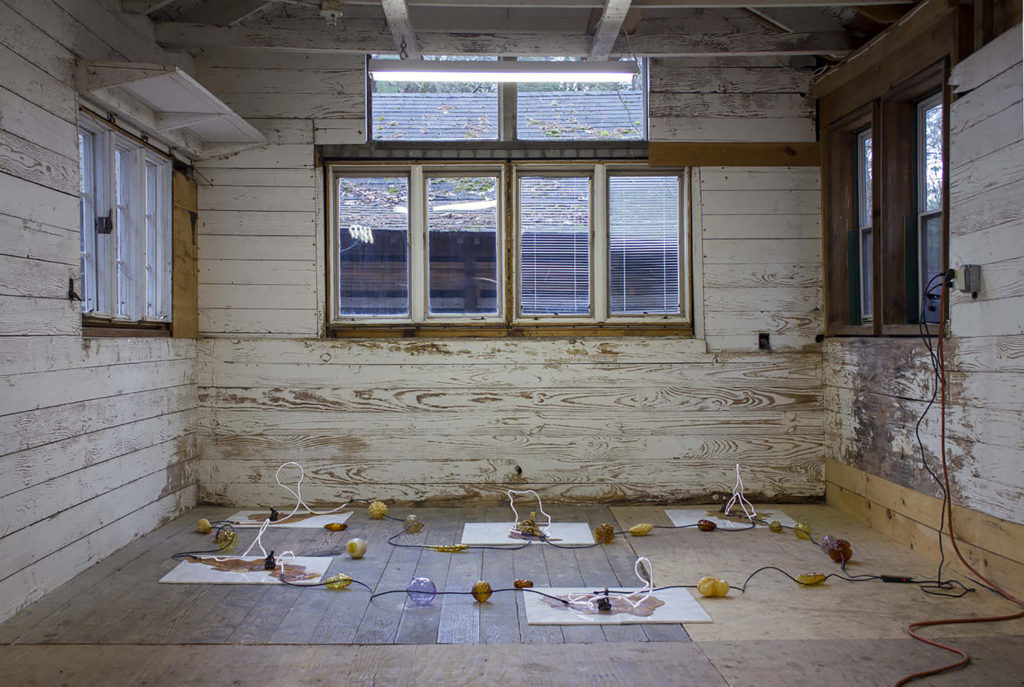
While investigating the truthfulness of "American Honey made by American Bees" labels, The first time honey bees came to the North American continent was in 1622 with European immigration.
This species’s introduction and honey trade is highly synchronized and associated with the history of human immigration. Due to the China-US trade war, the Chinese honey is shipped to surrounding countries, such as Vietnam, Thailand, Indonesia, and Malaysia to avoid the unfair tariff, and then relabeled for export to the US. The honey smuggling revealed the untrustworthiness of the labels, and asked whether we should re-examine our prejudices against
immigrant culture? After working with RISD's lab to examine pollen samples, we found that the exclusively Chinese pollen Polygonaceae was contained in the “American Honey.” This ChineseAmerican honey, born of stowaways and transplants, begs the question: how much is culture altered during transplantation? -
Making A Stationary Rain On the North Pacific Ocean
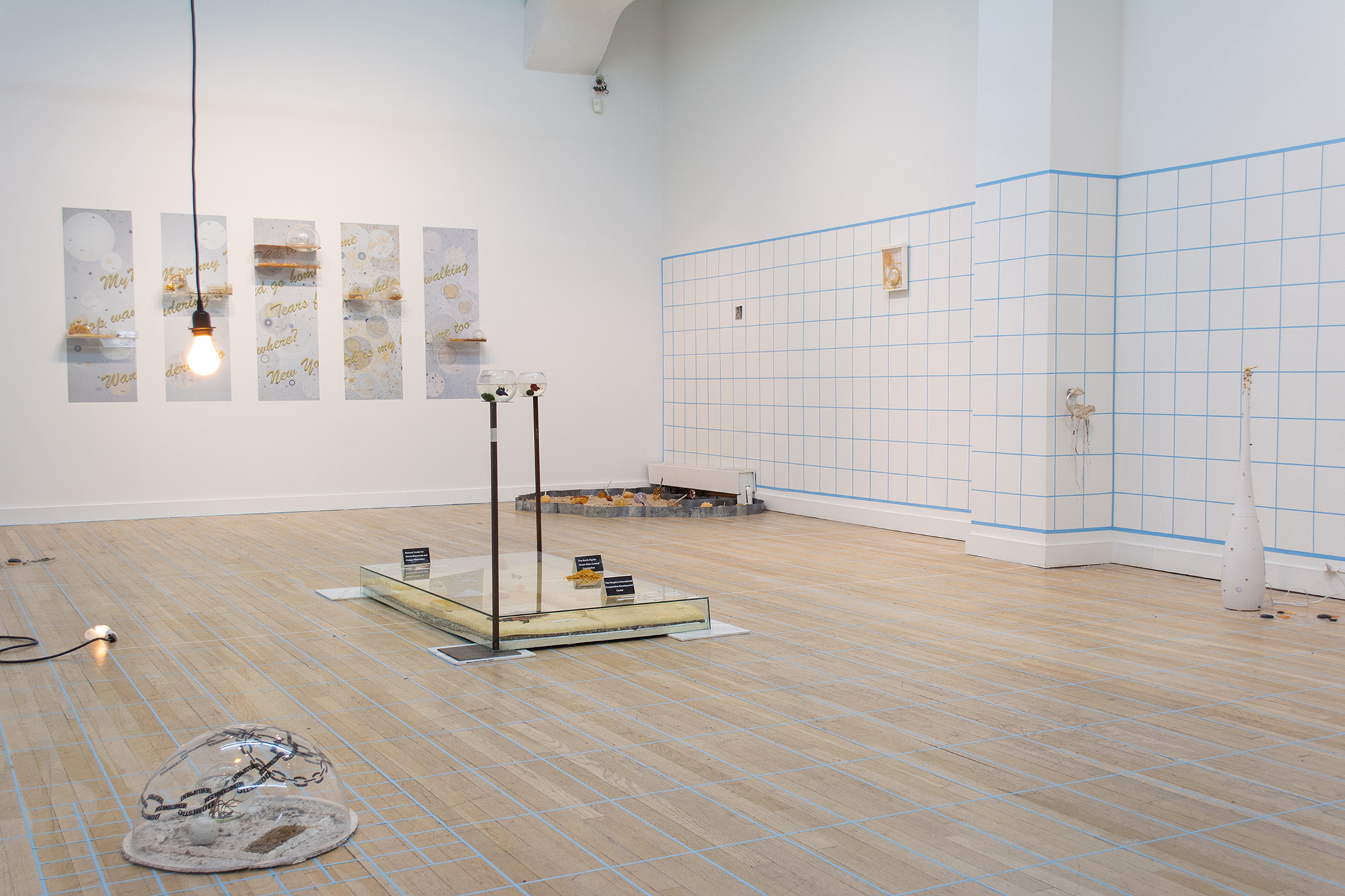
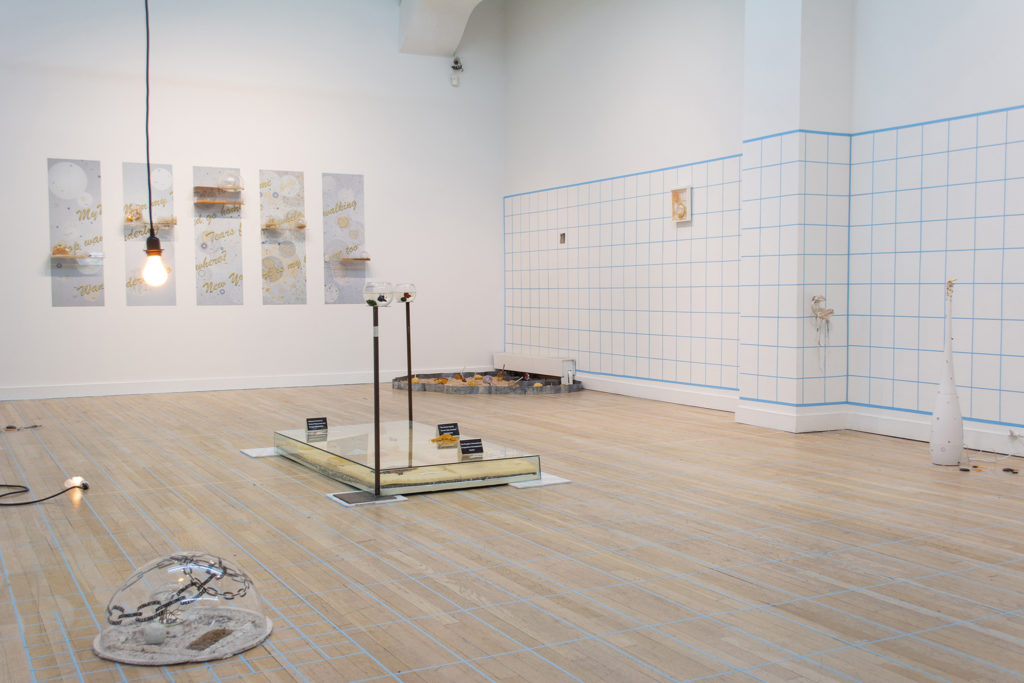
This is an installation blurring fact and fiction, art and science, truth and near-truth, it is an immersive installation exploring a not-so-distant future in which China and the United States are in the midst of a political Cold War, echoed externally by an atmospheric antagonism rendered by climate change that has turned China and the U.S. into the hot and cold centers of the world.